Bardia Mohammadi and I have two papers at workshops co-located with ASE 2026 (40th International Conference on Automated Software Engineering) in Munich this October. Mine is at SWGeno 2026 (2nd International Workshop on Software Genomics), his at APR 2026 (7th International Workshop on Automated Program Repair). Both papers are about software that machines generate and humans no longer fully control.
ForkOps
ForkOps: Operating Fleets of Generated Software Variants
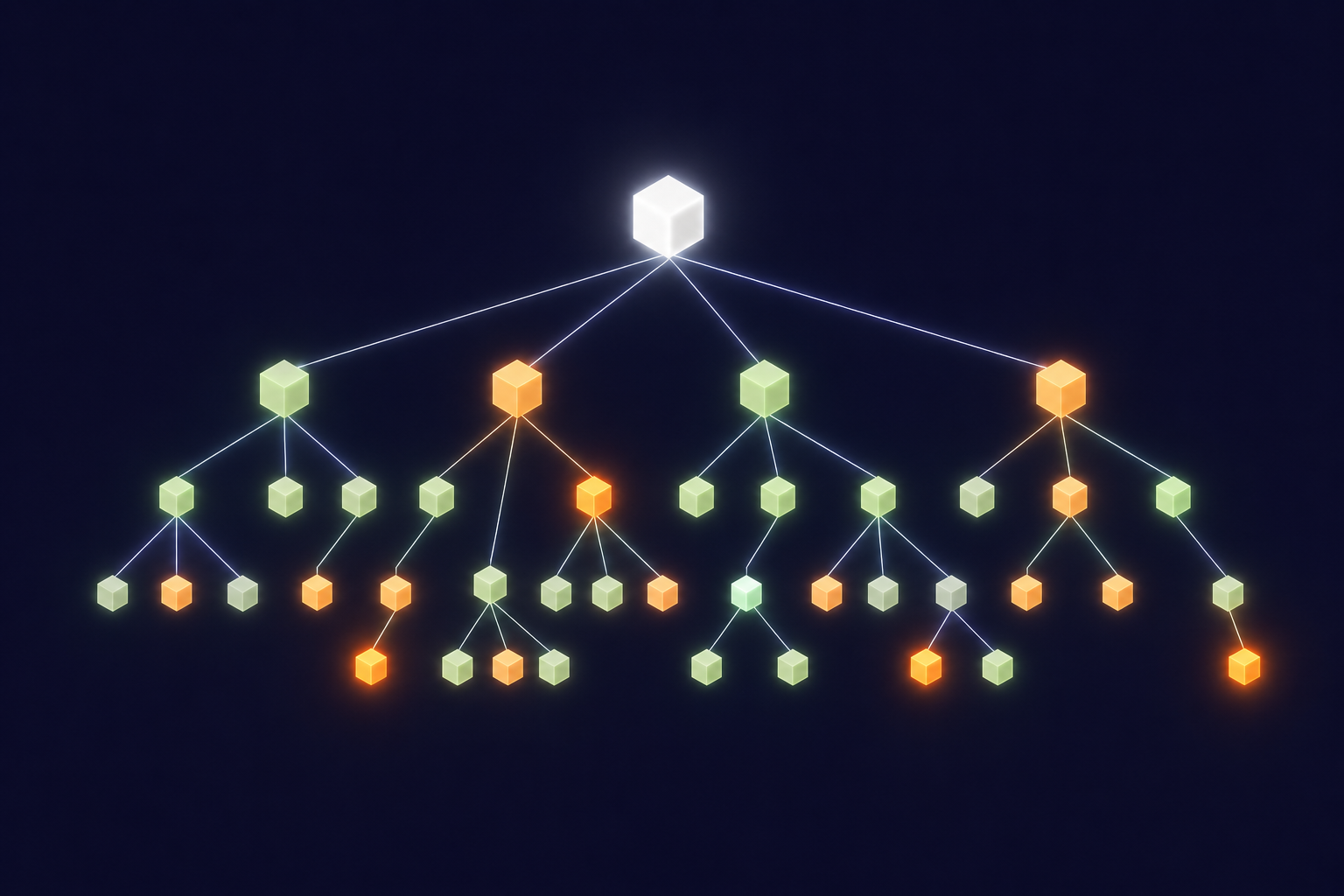
If you have read The Fork Winter or the follow-up, you know where this comes from. When generating a specialized variant of a system becomes cheaper than maintaining the original, you stop having one program and start having a fleet: hundreds of generated variants, each tuned to a customer or a workload, each drifting. This paper, making the operations story concrete, asks what it means to run a fleet of generated software: tracking it, patching it, proving the patches safe, and retiring the variants that cannot keep up. It is a solo paper, and the first of the Fork Winter ideas that made it into a peer-reviewed venue.
Whose Oracle Is It?
Whose Oracle Is It? The Authority Problem in Deployed Agentic Program Repair
Automated program repair has an awkward question hiding under its benchmarks: tests are both the judge of a patch and a thing the patch could edit. Benchmarks dodge this by freezing the tests. Real repositories cannot, because tests legitimately evolve with the code. Led by Bardia Mohammadi, the paper studies 230 merged bug-fix pull requests across nine repositories and finds that test-changing repairs routinely touch existing test files, so the question of who may authorize a change to the evidence that accepts a patch is not hypothetical. It is the norm, and nobody owns the decision. This one should resonate with anyone who has thought about agent guardrails.
We will present both papers in Munich in October. If you are at ASE, come say hi.