A comprehensive overview of research projects and systems.
AI agents now edit code, update databases, and restart services, and many of their failures happen in the runtime around the model. We define and enforce four contracts between the model and the systems it acts on. Effect: an external effect becomes permanent only when the runtime commits it (Atomix, Externalization Barriers, Irreversibility Budget, typed recovery actions). State: agent memory is managed like virtual memory (ClawVM, ClawMMU). Composition: an approval stays valid only while the evidence it relied on is unchanged. Intent and evidence: the runtime records each model call in tamper-evident form, so operators can check afterward which context shaped an action (Agent Flight Recorder).
Incidental cues in a prompt can change which algorithm a model chooses by up to 100 percentage points, among solutions that pass the same tests. Standard benchmarks, which check only outcomes, cannot detect this. We study how context steers generated code, who decides what counts as correct when agents repair programs, and how to build LLM pipelines for code and SQL that can be checked.
Cache Saver caches LLM calls in multi-step pipelines. Its namespace-aware, list-valued cache keeps sampled outputs statistically valid and makes experiments reproducible. It cuts inference cost by about 25% and CO2 emissions by about 35% on average.
IOLM-DB compiles recurring semantic operators over table columns into specialized models that are 1.8 to 2.8 times smaller in memory than the general-purpose model. Our semantic cache for OLAP canonicalizes SQL and natural-language queries with an LLM and reaches an 82% hit rate with zero false hits.
Grappa trains graph neural networks by exchanging only gradients between partitions and periodically repartitions the graph to expose new neighborhoods. In the paper's experiments it trains 4x faster on average (up to 13x) than the baseline systems, and it scales to trillion-edge graphs on commodity hardware.
Fixed workloads let learned systems overfit, so standard benchmarks overstate their benefit. We proposed benchmarks that vary workloads and data, report distributions and outliers in addition to averages, and account for the cost of training learned database components.
Learned indexes can answer lookups faster than B-trees but handle updates poorly. We worked on learned index structures that support concurrent inserts and deletes.
A graph processing system built in collaboration with the University of Toronto that automatically fine-tunes configuration and synthesizes optimized components. It supports efficient updates at arbitrary granularity and was extended toward mining anomalies and insights from streaming graph data.
Tesseract is a distributed graph mining system that executes static algorithms on dynamic graphs. It introduces a change detection algorithm to find exact modifications and decomposes streams into per-update tasks, achieving millions of updates per second with low latency.
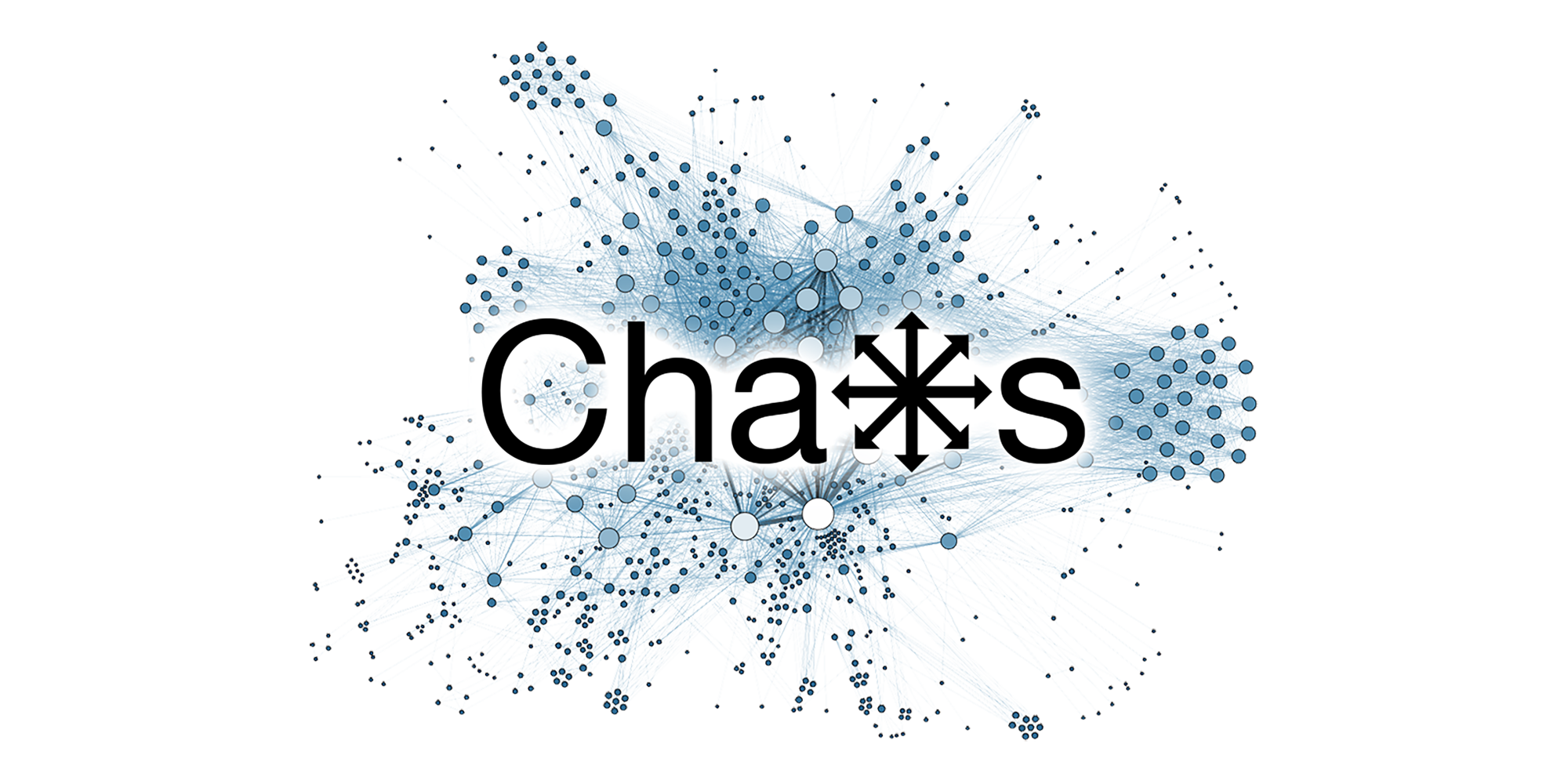
Chaos scales graph processing from secondary storage to multiple machines in a cluster using streaming partitions. It processed 1 trillion edges on small commodity clusters, and a later run processed 16 trillion edges (256 TB) on twenty commodity servers.
Requirements engineering for decentralized platforms. We built a computational decision-support workflow for DAO governance and applied requirements-driven design to a decentralized prediction market.
A blockchain node designed for analytics. It ingests blocks like a standard node and adds an analytics API, which avoids separate ETL pipelines.
SkyPulse integrates satellite imagery with other sources (Sentinel, Twitter/X, Telegram) for infrastructure monitoring, disaster management, and traffic analysis. Developed with armasuisse, it uses LLMs and image-to-text models for data fusion and provides a conversational interface for querying and visualization.
Hurricane uses adaptive work partitioning and task cloning to handle skewed workloads, spreading data across all nodes to improve CPU and storage utilization.
Hailstorm is a filesystem and storage substrate for LSM-based distributed databases. It pools storage within racks and offloads compaction to remote nodes. On skewed workloads, it raised average MongoDB throughput by 60%, lowered tail latency by up to 5 times, and sped up range queries by up to 22 times.